Give the bed a deliberate position
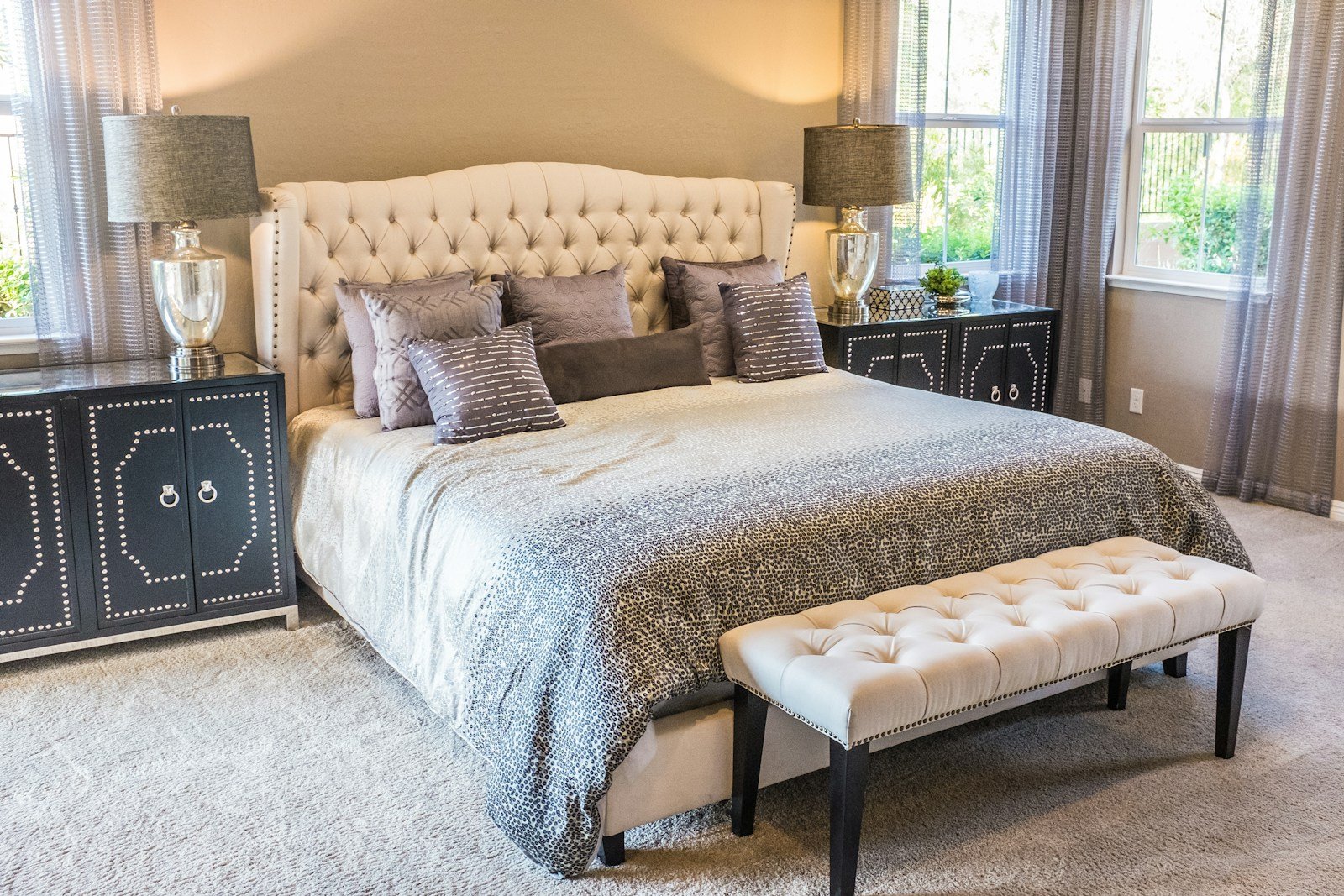
The bed is usually the largest object in the room, so its position organizes everything around it. Consider access, doors, windows, and the places where you need to move.
Draw a simple plan before moving heavy furniture. Include the space needed to use drawers and open doors. The most attractive arrangement is not always the one that works best in a small room.
Simplify the bedside surfaces
A bedside area needs to support the things you use before sleep and after waking. A light, a book, and a place for a glass may be enough. Let that list guide the size of the surface.
Two sides of the bed do not have to be identical. Different pieces can still feel related through color, shape, or height. Choose usefulness before forcing a matching pair into a tight room.
Keep storage understandable
Storage works better when items have clear categories. Keep everyday clothing accessible and place less frequently used items elsewhere when possible.
Use the inside of existing storage well before adding more furniture. A large extra unit can solve one storage problem while making the room harder to move through.
Make one quiet area
A bedroom does not need an elaborate reading corner to offer a pause. A clear bedside surface, a view toward a window, or a single comfortable seat can be enough.
Choose the detail you will use most often. The room should support rest in a way that fits your routine, rather than trying to include every feature from a larger room.
ONE IDEA TO TAKE HOME
Clear one bedside surface and keep only what supports your evening and morning routines.
Keep this perspective for later.
Open your reading list ↗Neayer publishes general design observations and original editorial ideas. This article is not a report on a named architectural project. Our editorial approach