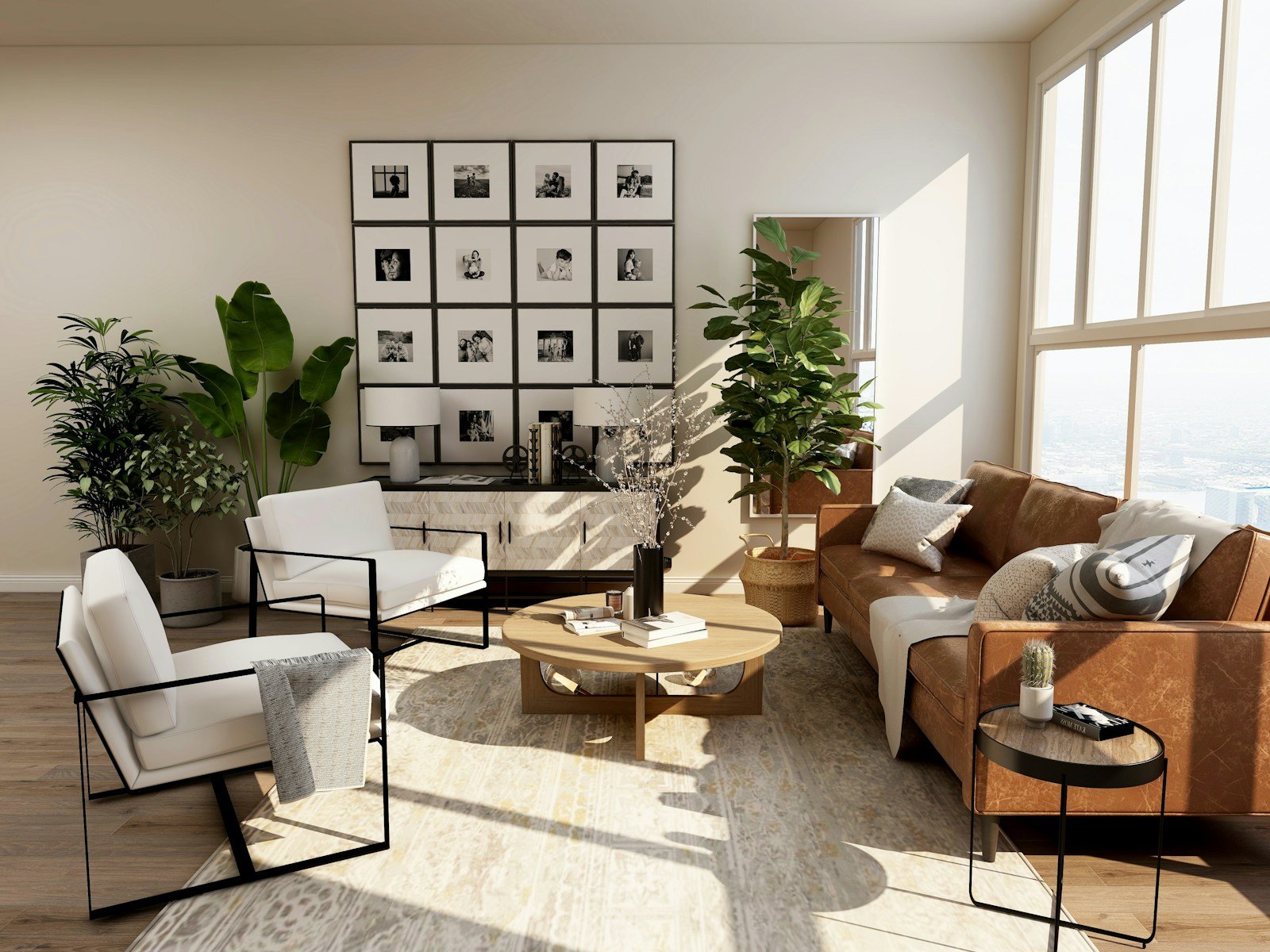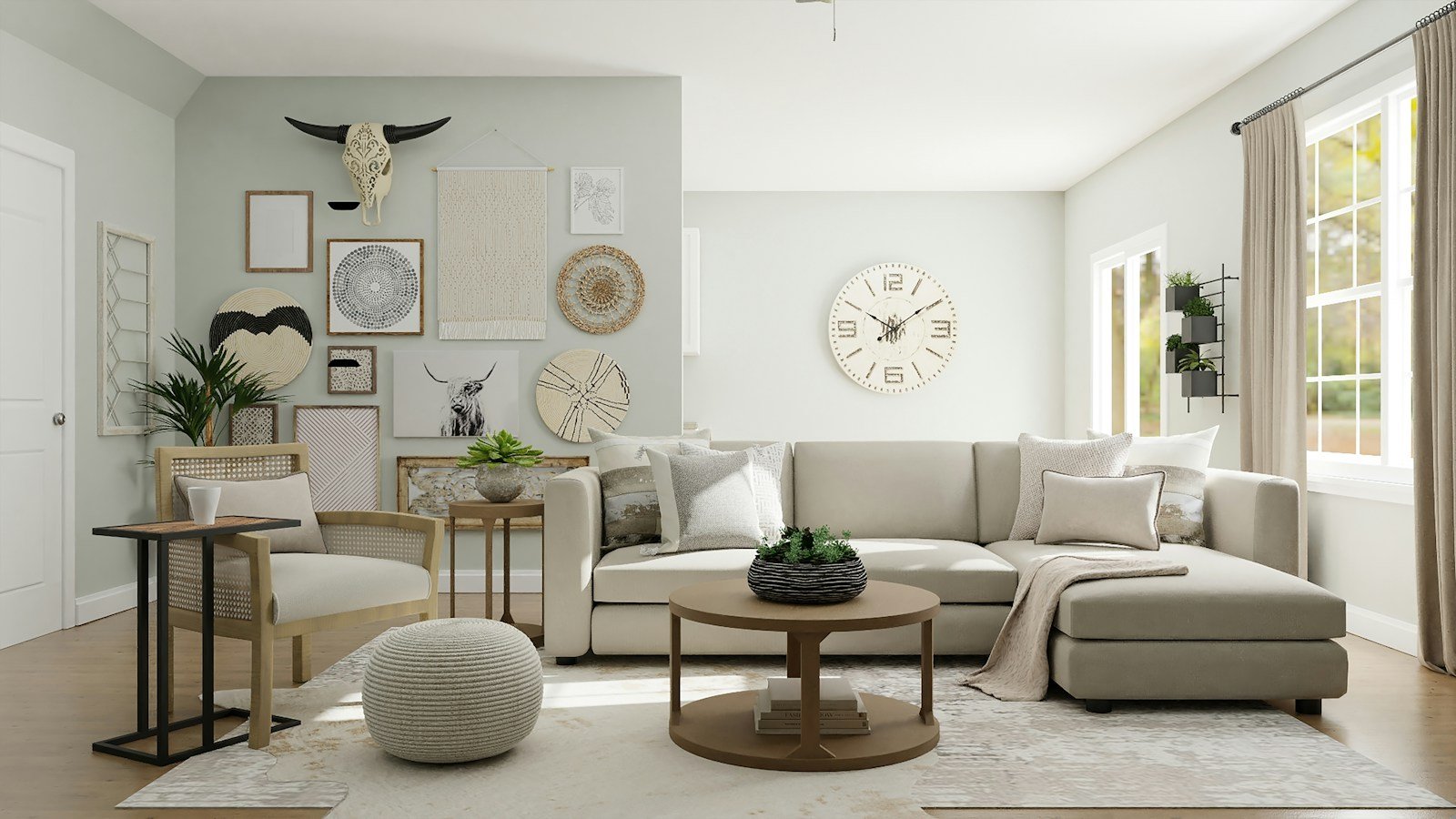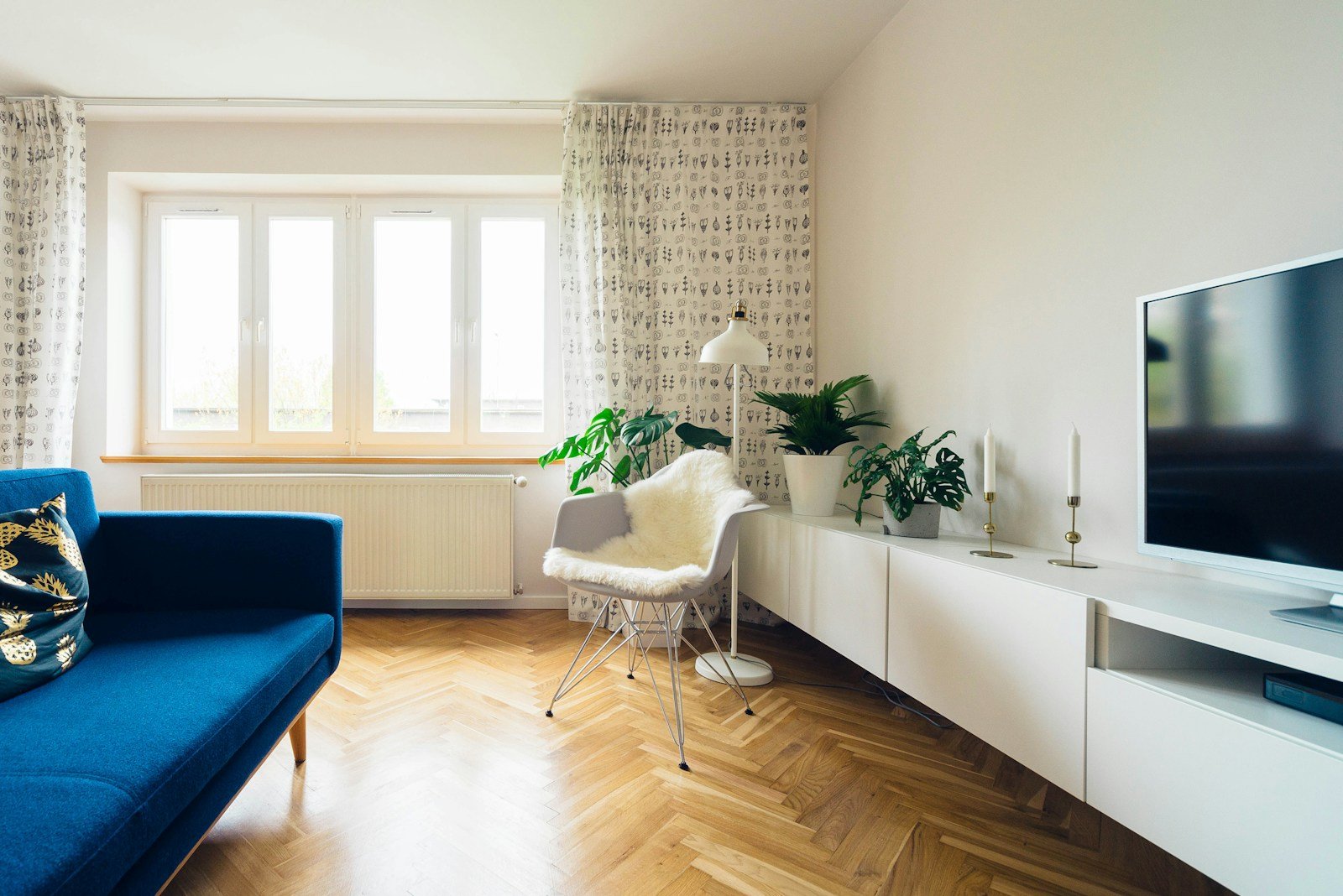
The view creates a direction
A window gives the eye somewhere to go. Even when it faces a small patch of sky or a neighboring tree, it can become a point of orientation within the room.
Look at how the furniture responds. A seat can face the opening, sit beside it, or turn away from it. Each arrangement changes whether the view feels central or incidental.
The frame edits the scene
A window shows only part of what lies outside. The frame, sill, and surrounding wall help shape that picture. A smaller view can be more focused than a broad one.
Try observing the window as a composition. Notice what falls at the edge and how the scene changes as you move through the room. The best position for looking out may not be the room’s center.
Treat the surrounding area as useful space
The area around a window can hold a reading seat, a work surface, or a quiet place to pause, depending on the room. Keep access and the practical operation of the window in mind.
Avoid treating every sill as a shelf that must be filled. A few objects can add character, but an open section may preserve the relationship to the outside more clearly.
Let the room change with the day
The window is part of a changing scene. Light, weather, and activity outside can alter the experience of the room without anything inside moving.
Spend a few minutes observing rather than adjusting. Understanding what is already present can reveal a useful design decision you would otherwise miss.
ONE IDEA TO TAKE HOME
Sit in three different places near a window and notice how each position changes the room.
Keep this perspective for later.
Open your reading list ↗Neayer publishes general design observations and original editorial ideas. This article is not a report on a named architectural project. Our editorial approach